We aim to develop AI scientists for self-driving laboratories capable of breaking both physical and knowledge bottlenecks in autonomous materials discovery. We believe AI is not as a replacement for the researcher, but as an active collaborator with human scientists.
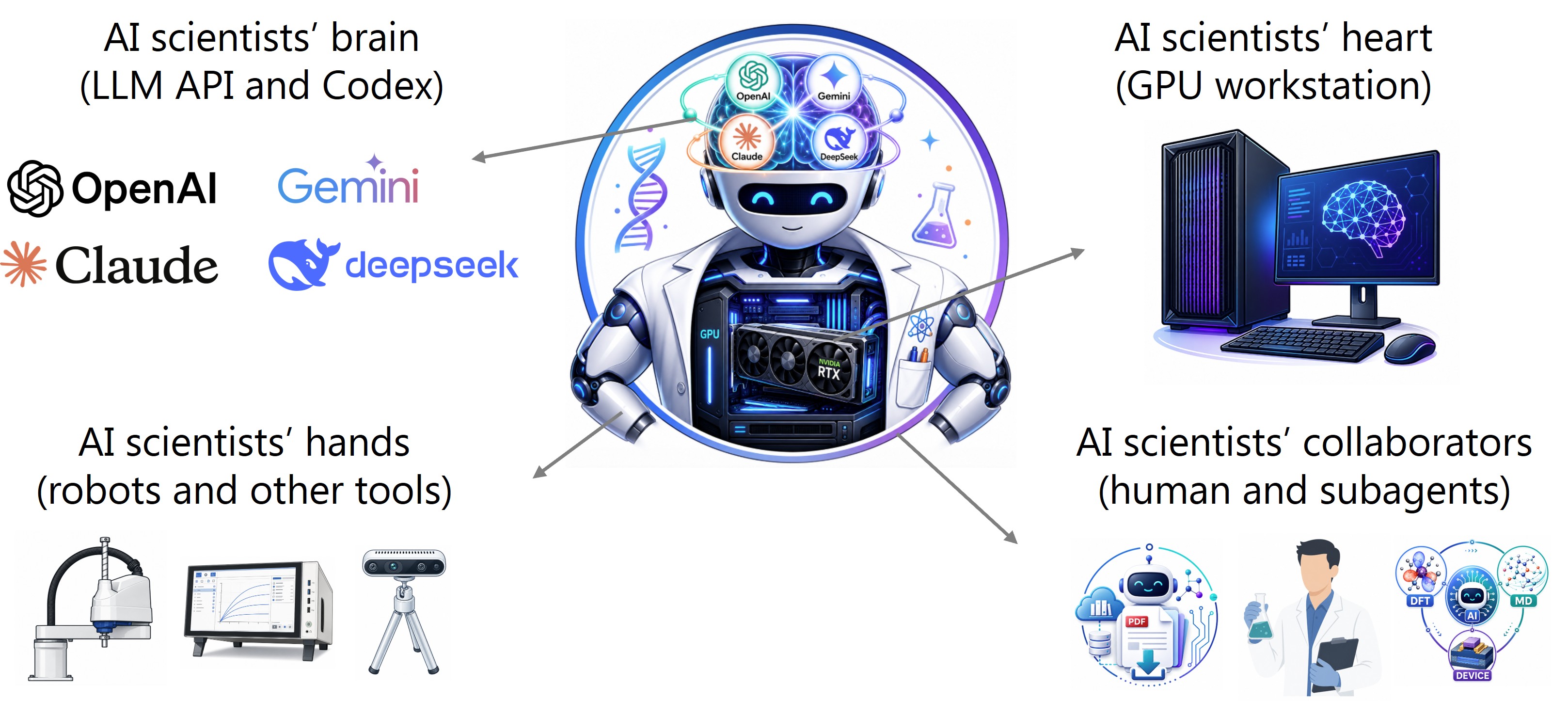
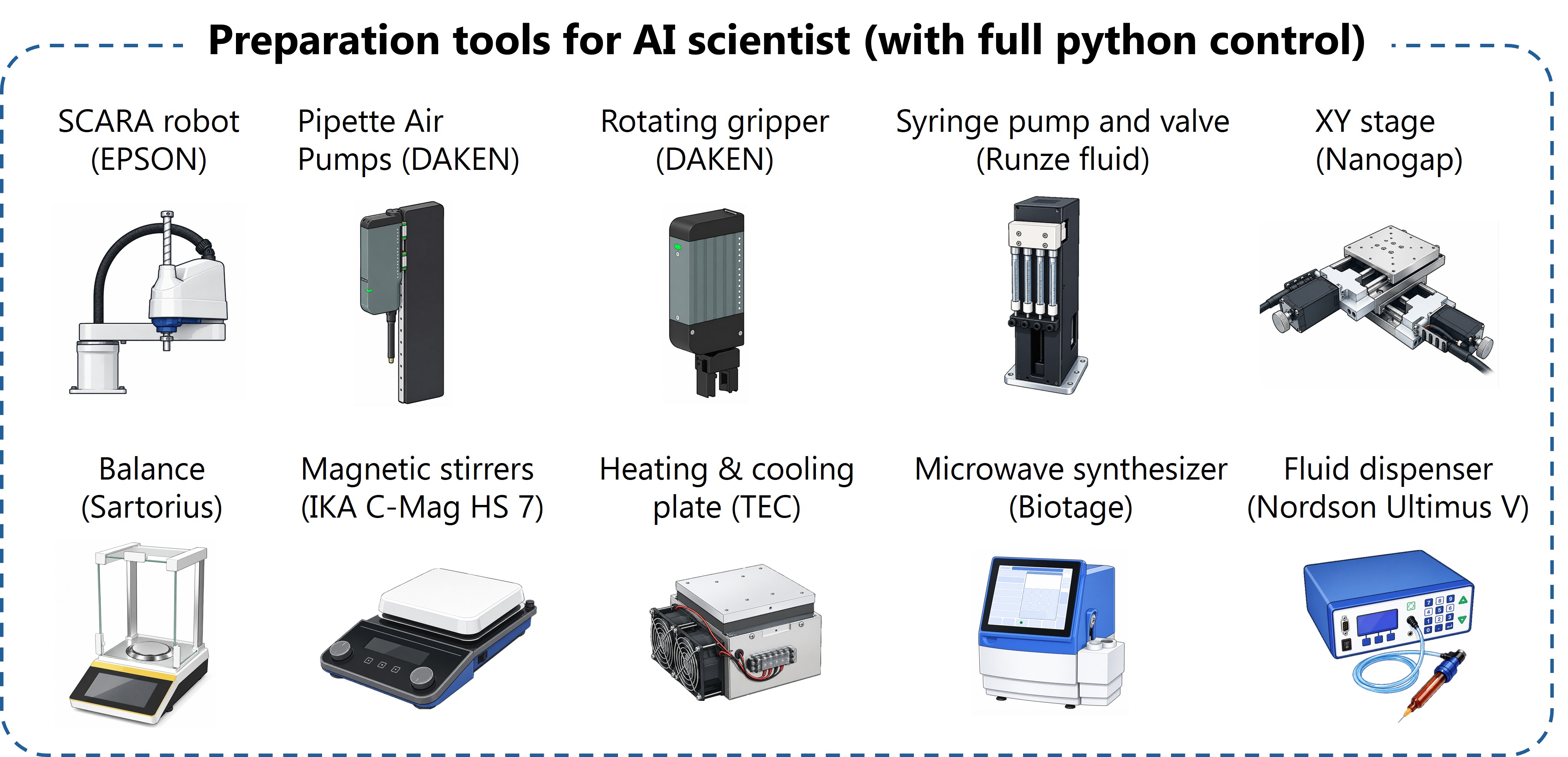
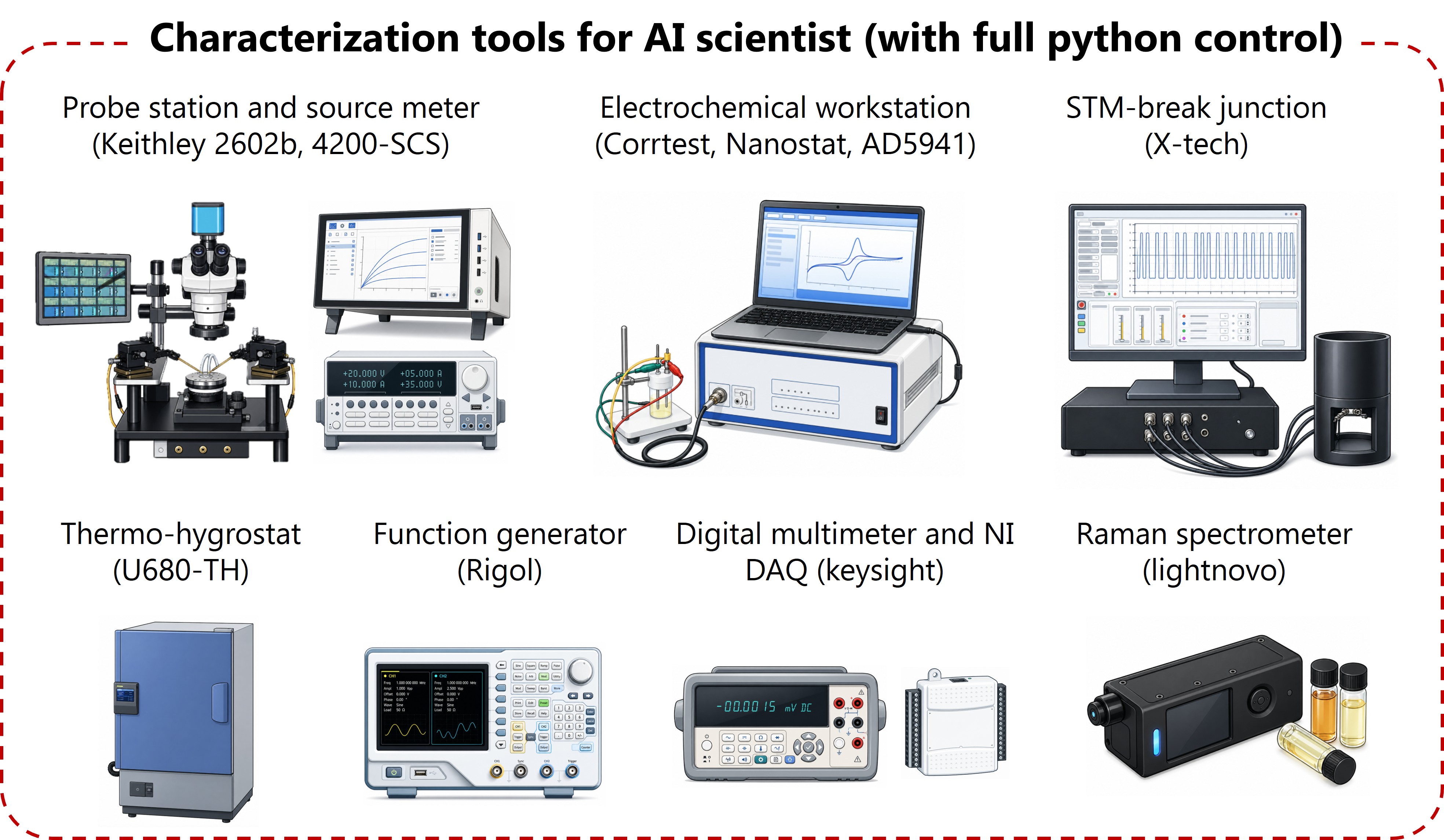
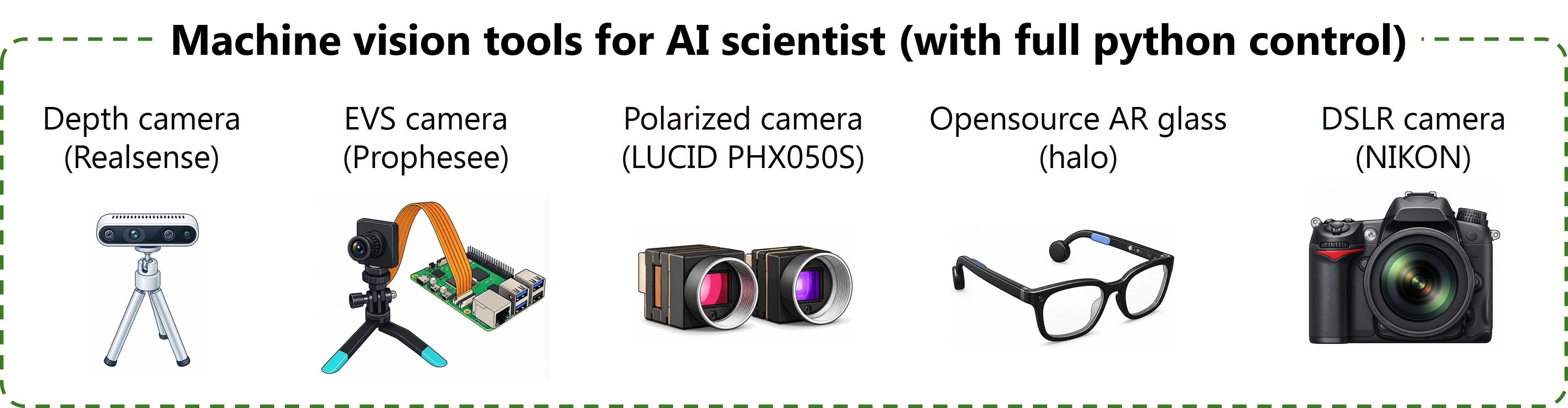
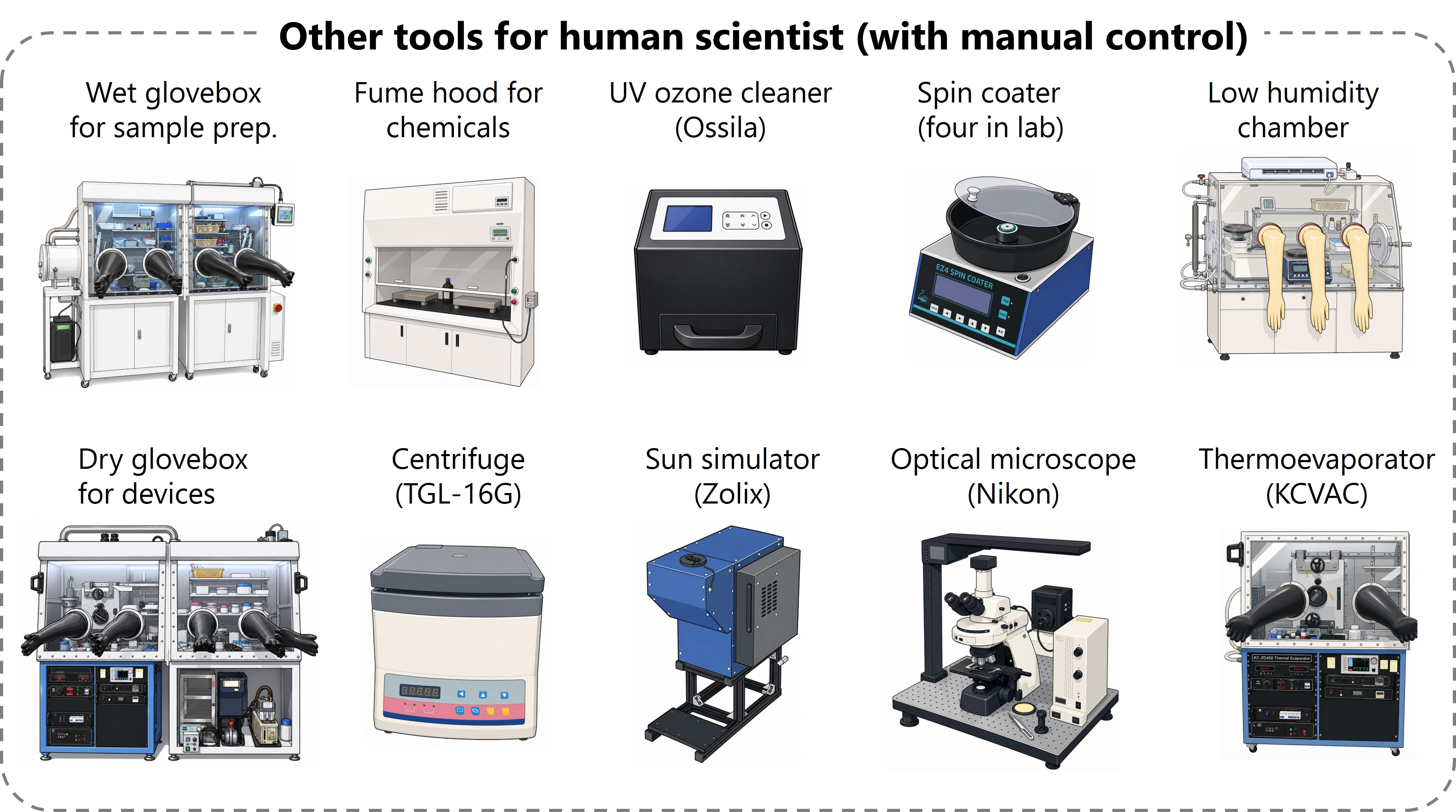
To address the physical bottlenecks for AI scientists, our group develops different tools with full python control. This includes preparation, characterization, and machine vision tools for sample preparation and device measurements. Of course, we have many tools/instruments for human scientists to collaborate with AI (Honestly speaking, it is too expensive to make everything automated in this stage).
Effective collaboration between human and AI is very important. In our lab, we actively use Codex as software to interact with AI scientists. To support hands-on hardware interaction, our lab provides a lot of hardware platforms and learning boxes, including Arduino (Uno, Mega, Nano 33 BLE Sense, Portenta H7), STM32 microcontrollers (F103, U5, N6), FPGA (Zynq, PYNQ), NVIDIA Jetson Orin edge computing module, WowRobo robotic arms, and different development boards for wearable sensors (including ADS1299 for EEG/EMG acquisition and the AD5941/ADuCM355 for wearable electrochemical workstations).
To address the knowledge bottleneck for AI scientists, we systematically create different databases with all literature & SI downloaded:
- Single-molecule conductance (SMC) database (releasing in Fall 2026).
- Organic electrochemical transistor (OECT) database.
- Traditional Chinese medicine (TCM) database (in progress and will release in 2027).
We aim not only to provide open resources that benefit the scientific communities, but also to supply rich domain knowledge to train AI scientists for autonomous materials discovery.